

2 Peas and a Dog
Non-Fiction Text Features, Text Features Anchor Charts, Informational Text
Non-Fiction Text Features, Text Features Anchor Charts, Informational Text
Couldn't load pickup availability
All prices are in Canadian dollars.
Pages: 21 Pages + Google Slides
Answer Key: Does not apply
Teaching Duration: 30 minutes
Looking for a ready-to-use lesson that teaches students how to identify and use common non-fiction text features? This engaging Non-Fiction Text Features Lesson helps students recognize the purpose of text features while applying their learning to authentic non-fiction books.
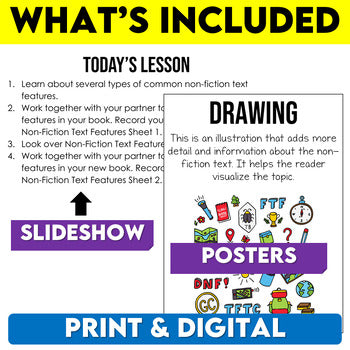
Through direct instruction, classroom posters, and hands-on partner activities, students learn how authors use headings, photographs, diagrams, captions, tables, glossaries, indexes, and more to organize information and support reader comprehension. Students then apply these skills by exploring real non-fiction books and identifying text features independently.
Perfect for Grades 4–8, this no-prep resource is available in both PDF and Google Slides™ formats, making it ideal for a Language Arts lesson. The lesson includes direct instruction, classroom posters, and two graphic organizers for authentic practice with non-fiction texts.
Ontario Curriculum Alignment: Text Patterns and Features C1.3
Perfect For:
Grades 5–8 classrooms
Non-fiction text feature review
Literacy centres/stations
Guided Reading groups
Library or Learning Commons lessons
Click Here To View The Preview
What's Included:
Detailed teacher lesson plan
Student reference sheet explaining common non-fiction text features
Full-page classroom posters
Graphic organizers
PDF & Google Slides™ formats
Students Will Learn About:
Headings
Photographs
Drawings
Diagrams
Captions
Tables
Table of Contents
Index
Glossary
Students first learn the purpose of each feature and then apply their understanding by locating examples in authentic non-fiction books.
Students Will Develop Skills To:
Identify common non-fiction text features
Explain the purpose of each text feature
Navigate informational texts more effectively
Locate important information within non-fiction books
Strengthen reading comprehension
Analyze how authors organize information
Work collaboratively with classmates
Skills & Standards Covered:
Informational text
Non-fiction text features
Text analysis
Critical thinking
Collaborative learning
Organization of information
Why You’ll Love This Resource:
✅ Ready-to-teach lesson with minimal preparation
✅ Students practice using authentic non-fiction books instead of isolated worksheets
✅ Includes eye-catching classroom posters for ongoing reference
✅ Encourages collaboration through partner activities
✅ Graphic organizers provide meaningful application of learning
✅ Available in both PDF & Google Slides™ formats
✅ Saves valuable planning time with a complete lesson
Resource Notes:
This lesson works best when students have access to a variety of non-fiction books from the classroom, school library, or public library.
The included posters make an excellent year-round classroom reference for reading and writing instruction.
Help your students become stronger informational readers by teaching them how authors organize non-fiction texts. This ready-to-use lesson combines explicit instruction, visual supports, classroom posters, and authentic reading practice to build confidence and improve reading comprehension skills.