

2 Peas and a Dog
Plastic Alternatives Media Literacy Lesson, Grade 6 Science
Plastic Alternatives Media Literacy Lesson, Grade 6 Science
Couldn't load pickup availability
All prices are in Canadian dollars.
Pages: 25 Pages + Google Slides
Answer Key: Included
Teaching Duration: 90 minutes
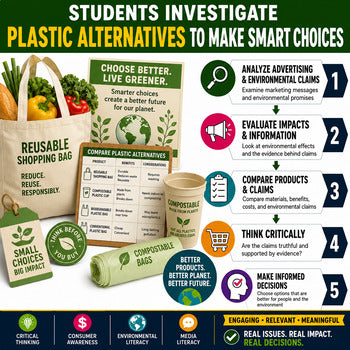
Looking for a ready-to-use, engaging Media Literacy lesson that helps students think critically about environmentally friendly products? This Plastic Alternatives Consumer Awareness Lesson helps students become thoughtful, informed consumers by investigating reusable shopping bags and compostable plastics. Through authentic consumer awareness activities, students evaluate environmental marketing claims, compare products, and think critically about the information they encounter every day.
Perfect for Grades 6–8, this no-prep lesson is available in both PDF and Google Slides™ formats, making it ideal for whole-class instruction, independent learning, or substitute plans. Students won't just learn about plastic alternatives; they'll investigate real products, evaluate environmental claims, and explore how marketing influences consumer choices. This lesson works equally well as a Media Literacy or Science lesson and connects naturally with the Grade 6 Ontario Science Biodiversity Unit.
Click Here To View The Preview
Save Money - Buy The Bundle: This resource is included in this comprehensive 11-resource Grade 6 Media Literacy Bundle, which helps students become thoughtful, informed consumers by exploring real-world topics.
Perfect For:
- Grade 6–8 classrooms
- Media Literacy lessons
- Consumer Awareness lessons
- Science lessons
- Cross-curricular Science and Language instruction
- Grade 6 Biodiversity Unit
- Sub plans
What's Included:
- 1 complete Media Literacy lesson
- Detailed lesson plan
- Student graphic organizers
- Reflective journal prompt
- Meaningful extension assignment
- Answer keys
- Detailed assessment rubric
- PDF & Google Slides™ formats
Every Lesson Includes:
- Introduction to Consumer Awareness
- Video Comprehension Questions + Answer Key
- Journal Entry Assessment
- Quiz + Answer Key
- Extend Your Learning Assignment
Students Will Develop Skills To:
- Evaluate environmental marketing claims
- Analyze the effectiveness of plastic alternatives
- Make informed consumer decisions
- Think critically about product advertising
- Recognize environmental messaging
- Become responsible consumers
Engaging Real-World Topics Include:
- Compostable plastics
- Reusable shopping bags
- Environmental product claims
- Consumer awareness
- Sustainable purchasing decisions
Every lesson follows the same predictable structure, so students know what to expect while teachers enjoy an easy-to-teach routine. This lesson is built around a high-interest, real-world topic that encourages meaningful classroom discussion while developing essential media literacy and consumer awareness skills.
Skills & Standards Covered:
- Critical thinking and analysis
- Media literacy
- Consumer awareness
- Evaluating environmental claims
- Recognizing marketing techniques
- Environmental awareness
- Science and sustainability connections
Why Teachers Love This Resource:
- Covers Ontario Language Curriculum expectations
- Easily integrates into Media Literacy and Science units
- Supports the Grade 6 Ontario Science Biodiversity Unit
- Engages students with real-world, relevant topics
- Encourages critical thinking and meaningful classroom discussions
- Includes assessments, rubrics, and answer keys for easy grading
- Comes with PDF and Google Slides™ formats
- Saves planning time with a complete, ready-to-teach lesson
Resource Notes:
- Regular, reliable internet access is required for this resource.
- Internet access must allow students to view an online video.
Help your students become thoughtful, informed consumers by exploring how environmental marketing, product claims, and scientific evidence influence the choices we make every day. This ready-to-use lesson saves planning time while building the critical-thinking, consumer awareness, media literacy, and environmental literacy skills students will use when evaluating products and making sustainable purchasing decisions.